
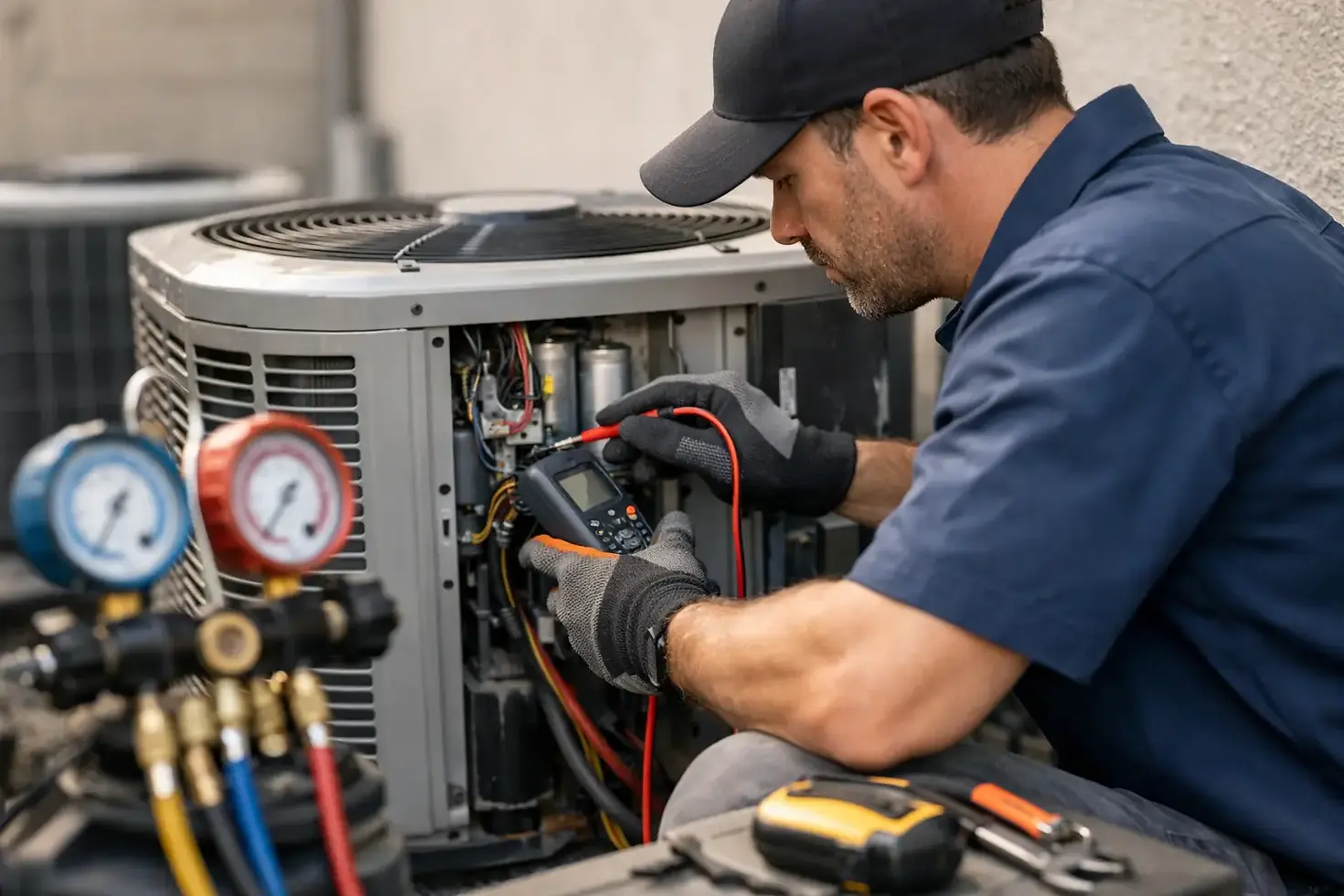
How to Repair HVAC System Problems Safely
- Jake Russell
- 5 days ago
- 6 min read
A home HVAC problem usually starts small. Maybe one room stays warm while the rest of the house cools down, or the system turns on but never seems to catch up. When homeowners search for how to repair HVAC system issues, what they really want is a clear way to tell the difference between a simple fix and a problem that needs a professional.
That distinction matters. Some HVAC issues can be handled safely with basic troubleshooting. Others involve electrical components, refrigerant, airflow design, or failing equipment that should not be guessed at. A careful approach protects your comfort, your equipment, and your home.
How to repair HVAC system issues starts with diagnosis
The first step is not replacing parts. It is narrowing down what the system is actually doing.
If the unit will not turn on at all, the issue may be power related, a thermostat problem, or a safety switch that has shut the system down. If it runs but does not heat or cool properly, the problem may involve airflow restrictions, dirty coils, low refrigerant, duct leakage, or a failing component. If it cycles on and off too quickly, the cause could be as simple as a clogged filter or as complex as improper system sizing.
A lot of homeowners lose time by focusing on the outdoor unit first. In reality, HVAC systems are connected systems. The thermostat, return air, blower, ductwork, drain line, condenser, and control board can all affect performance. Good troubleshooting looks at the whole setup, not just the part making the most noise.
Start with the safe checks every homeowner can do
Before opening panels or touching wiring, turn the thermostat to the correct mode and confirm the temperature setting is actually calling for heating or cooling. It sounds obvious, but thermostat programming, dead batteries, or accidental setting changes are common causes of service calls.
Next, check the breaker panel. A tripped breaker may restore power once, but if it trips again, stop there. Repeated breaker trips usually point to an electrical or equipment problem that needs a licensed technician.
Then inspect the air filter. A heavily clogged filter can choke airflow enough to cause poor cooling, frozen evaporator coils, overheating, and strain on the blower motor. Replace it if it is dirty, and make sure the replacement filter is the correct size and rating for the system.
Walk to the indoor unit and look for obvious warning signs. Water around the air handler may mean a clogged condensate drain. Ice on refrigerant lines may signal restricted airflow or refrigerant problems. Burning smells, buzzing, or rattling are also signs to stop and get the system checked.
Outside, make sure the condenser has room to breathe. Leaves, grass, and debris around the unit can reduce airflow and system efficiency. Clear the area gently, but do not spray water into electrical areas or start taking apart components unless you know exactly what you are doing.
Common HVAC problems and what they usually mean
When an HVAC system is blowing warm air during cooling season, the cause could be a dirty filter, a thermostat issue, a frozen coil, low refrigerant, or a failed capacitor or contactor at the outdoor unit. If the system is running but airflow feels weak, look first at the filter, supply vents, and return airflow. Closed vents and blocked returns can create house-wide comfort issues.
If the system starts and stops every few minutes, that is short cycling. Sometimes a dirty filter or thermostat placement causes it. In other cases, it points to deeper issues such as coil problems, control failures, or an oversized system. That is one reason repair is not always just about the equipment itself. In custom homes and remodels, duct design and load calculation matter just as much as the unit.
Uneven temperatures from room to room often lead homeowners to assume the equipment is failing. Sometimes it is. But many times, the issue is airflow balance, duct leakage, insulation gaps, or return air design. Repairing HVAC performance is not always about replacing a bad part. It may mean correcting the path the air takes through the house.
How to repair HVAC system airflow problems
Airflow issues are among the most common and most misunderstood HVAC complaints. If one room is stuffy, another is cold, and the system seems to run longer than it should, the problem may be in the ductwork or air distribution setup.
Start by checking that supply registers are open and not blocked by furniture, rugs, or curtains. Then make sure return grilles are clear. A return blocked by a couch or storage can affect the whole system.
If the filter is clean and vents are open but airflow is still weak, the blower assembly may need service, the evaporator coil may be dirty, or ducts may be leaking in the attic or crawlspace. Those are not ideal do-it-yourself repairs. A dirty indoor coil, for example, affects heat transfer and airflow at the same time, and cleaning it incorrectly can damage the coil.
This is where experienced HVAC service becomes valuable. A good technician does not just confirm that air is coming out of the vents. They check static pressure, inspect the blower, evaluate duct conditions, and determine whether the issue is mechanical, airflow related, or both.
When not to attempt HVAC repair yourself
There is a point where trying to fix the issue yourself can make the repair more complicated.
If the system involves refrigerant, stop. Refrigerant problems require proper tools, certification, and leak diagnosis. Adding refrigerant without finding the cause of the loss is not a repair.
If you see burnt wires, smell something electrical, or hear loud humming from a motor or contactor, stop. Electrical repairs inside HVAC equipment carry shock and fire risk.
If the furnace is involved and you notice ignition problems, gas smell, soot, or repeated shutdowns, do not keep resetting it. Gas heating equipment has safety systems for a reason, and repeated failures need professional diagnosis.
The same goes for control boards, capacitors, compressors, and blower motors. These parts can sometimes be replaced, but correct diagnosis matters. Replacing the wrong component wastes time and does not address the real problem.
Repair versus bigger system issues
Sometimes homeowners ask how to repair HVAC system failures when the better question is whether the issue is isolated or part of a larger design problem.
If your home has had comfort issues for years, if certain rooms never cool properly, or if the unit seems to run constantly during Texas heat, the problem may not be a single broken part. It may involve duct layout, return air sizing, attic duct leakage, or a system that was never matched correctly to the home.
That is especially relevant in custom homes and new construction. HVAC is not just equipment. It is equipment plus airflow, load calculation, duct design, and control strategy. A repair can restore operation, but it will not fix poor design on its own.
For homeowners along the 290 and 71 corridor between Houston and Austin, long cooling seasons put real stress on systems. That means small airflow or maintenance problems can become larger comfort issues faster than expected. Catching them early usually protects both performance and equipment life.
What a professional HVAC repair visit should accomplish
A professional repair appointment should do more than get the system running again for a day or two. It should identify the root cause, confirm safe operation, and explain what was found in plain language.
That includes checking electrical components, verifying airflow, inspecting coils, evaluating drainage, testing system controls, and measuring performance. In some homes, it should also include a look at the duct system, especially if comfort complaints are room specific.
Clear communication matters here. Homeowners should understand whether the problem was a one-time failure, a maintenance-related issue, or a sign of a broader system concern. Builders and custom home clients should also expect repair recommendations that consider the house as a whole, not just the equipment cabinet.
A smarter way to prevent repeat repairs
The best repair is the one you do not have to make twice. Regular filter changes, seasonal service, clean outdoor units, and early attention to weak airflow or unusual sounds all help reduce major breakdowns.
It also helps to keep a simple record of what the system has been doing. If the breaker has tripped before, if one room has been warmer for months, or if the drain line has clogged more than once, that history helps pinpoint the cause faster.
For many homes, especially larger homes or homes with additions, repeat HVAC problems are often a signal that the system needs a more complete evaluation. Legacy Comfort Systems approaches repair with that bigger picture in mind, because dependable comfort comes from accurate diagnosis as much as it does from the repair itself.
If you are trying to figure out how to repair HVAC system issues, start with the safe basics, pay attention to patterns, and do not ignore warning signs. The right next step is not always the biggest repair. Sometimes it is simply getting a clear answer before a small problem turns into a long, uncomfortable one.