
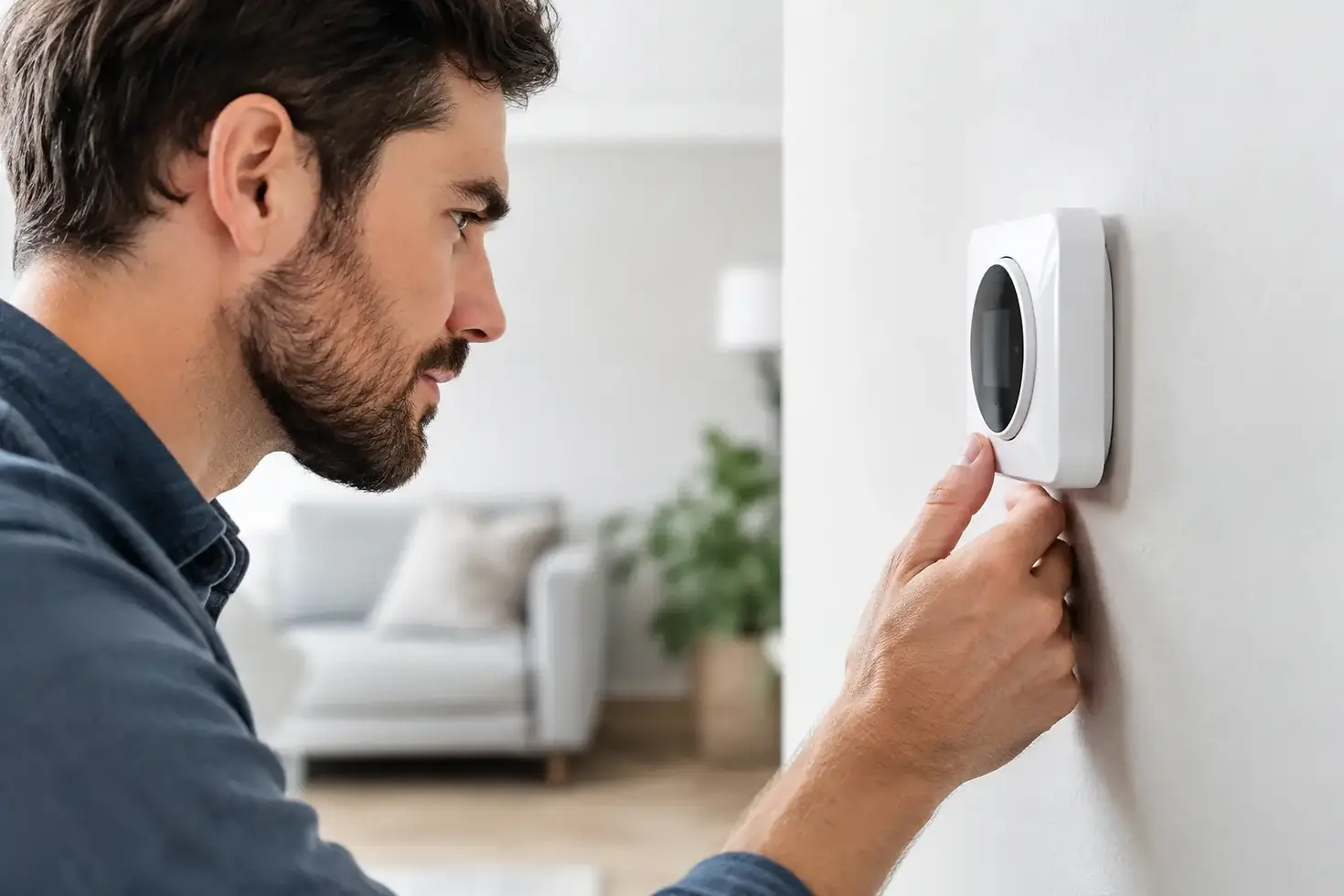
How to Diagnose Thermostat Issues at Home
A thermostat that goes blank, will not change the temperature, or seems to ignore your settings can make a Texas home uncomfortable fast. Knowing how to diagnose thermostat issues can help you rule out a simple setting or power problem before assuming the entire heating and cooling system has failed.
The key is to work methodically. A thermostat is the control center for your HVAC system, but it is only one part of a larger setup that includes equipment, electrical components, drainage protections, wiring, and airflow. What looks like a thermostat failure may actually be a furnace, air handler, heat pump, or outdoor unit issue.
Start With the Thermostat Settings
Before checking equipment, look closely at the thermostat itself. Confirm that it is set to the correct mode: Cool when you need air conditioning, Heat when you need heating, or Auto if you want the system to switch modes based on the indoor temperature.
Then check the set temperature. For cooling, set the thermostat at least 3 to 5 degrees below the current room temperature. For heating, set it several degrees above the room temperature. A one-degree difference may not immediately trigger some systems, especially if there is a built-in delay.
Also verify that the fan is set to Auto, not On. When the fan is set to On, it runs continuously even when the system is not actively heating or cooling. That can make it seem as though the air conditioner is running but not cooling, when the system is simply circulating room-temperature air.
If you have a programmable or smart thermostat, review the schedule. A programmed setback, vacation mode, geofencing feature, or energy-saving schedule can override the temperature you entered manually. Many thermostats display a message such as “Hold,” “Schedule,” or “Temporary” to show which command is currently controlling the system.
Check for a Blank or Unresponsive Screen
A blank screen is one of the most common thermostat complaints. Start with the batteries if your thermostat uses them. Replace them with fresh batteries, making sure they are installed in the correct direction. Low batteries can cause weak displays, intermittent operation, or a thermostat that loses its settings.
If new batteries do not restore power, the thermostat may rely on low-voltage power from the HVAC system. In that case, check whether the HVAC system's circuit breaker has tripped. If it has, reset it once. If it trips again, leave it off and arrange for professional service. Repeated breaker trips can point to an electrical or equipment problem that should not be ignored.
A clogged condensate drain can also shut down some cooling systems. Air handlers and furnaces may use a safety switch that turns the system off when water backs up in the drain pan. This protects your home from water damage, but it can leave the thermostat blank or unable to start the equipment. If you notice water near the indoor unit, a full drain pan, or moisture around the drain line, do not force the system to run.
How to Diagnose Thermostat Issues Versus HVAC Problems
A thermostat may be doing exactly what it is supposed to do: calling for heating or cooling while another component fails to respond. Separating a control problem from an HVAC problem can save time and prevent unnecessary thermostat replacement.
When you change the temperature setting, listen for a soft click from the thermostat. On many conventional systems, that click means the thermostat has sent a signal for heating or cooling. It does not guarantee that the equipment has started, but it is a useful clue.
Next, listen and look for signs of system operation. With cooling selected, you may hear the indoor blower begin first, followed by the outdoor unit after a short delay. With heating, the sequence depends on whether your home has a furnace, heat pump, or another type of system. Some equipment includes delay timers that prevent immediate restarts after a recent cycle or power interruption.
If the thermostat display is on, the settings are correct, and it shows a cooling or heating call, but nothing happens, the issue may involve the equipment's power supply, safety controls, wiring, capacitor, contactor, blower motor, or another HVAC component. These are not reliable do-it-yourself repairs. A licensed technician can test the control circuit and identify the actual failed part without guesswork.
Look for Problems Caused by Thermostat Location
Thermostats read the temperature around them, not necessarily the temperature throughout the house. A poorly located thermostat can create comfort problems even when the device and HVAC equipment are operating normally.
Direct sunlight is a frequent cause of inaccurate readings. So are nearby lamps, televisions, kitchens, fireplaces, exterior doors, and supply vents. A thermostat on a wall that gets afternoon sun may read warmer than the rest of the home and run the air conditioner longer than necessary. A thermostat near a supply vent may get cooled or heated too quickly and shut the system off before other rooms reach the desired temperature.
In Central Texas homes, uneven temperatures can also come from duct leakage, undersized return air, poor insulation, zoning limitations, or an HVAC system that was not properly designed for the home. Replacing a thermostat may improve control features, but it will not correct an airflow or load-calculation issue. If certain rooms remain consistently hot, cold, stuffy, or humid, the diagnosis should include the entire system.
Inspect the Thermostat Carefully
Remove the thermostat faceplate only if it is designed to come off easily. Look for loose mounting, dust buildup, corrosion, or damaged wires. Do not pull wires out, twist wires together, or attempt to bypass terminals. Low-voltage thermostat wiring is part of a control system, and incorrect connections can damage equipment or create a more complicated repair.
A thermostat that is loose on the wall can sometimes read room temperature incorrectly because air is moving through the wall opening behind it. If you see a large gap around the wiring hole, it may need to be sealed properly after the underlying issue is assessed.
Older mechanical thermostats can lose calibration over time. Newer digital models can also fail, particularly after electrical surges, moisture exposure, or years of use. Still, replacement should follow testing, not guesswork. The right thermostat must be compatible with your system type, including conventional heating and cooling, heat pumps, multi-stage equipment, zoning controls, humidifiers, or variable-speed systems.
Know When to Call for HVAC Service
Homeowner checks are useful for settings, batteries, and obvious power issues. Stop troubleshooting and request service if you smell burning, see water around HVAC equipment, hear buzzing or grinding, notice a breaker that continues to trip, or find damaged wiring.
Professional help is also the right next step when the thermostat is calling for cooling but the outdoor unit will not run, when the system runs without changing the indoor temperature, or when the thermostat repeatedly loses power. These symptoms can overlap, and testing requires the right tools and a clear understanding of how the equipment is wired and protected.
For homeowners along the 290 and 71 corridors, Legacy Comfort Systems can evaluate the thermostat, equipment controls, airflow, and drainage system as one connected comfort system. That approach matters because dependable comfort is rarely about one component alone.
A thermostat should make your home easier to manage, not leave you guessing. Start with the simple checks, pay attention to what the system does after each adjustment, and let a qualified HVAC technician handle anything involving electrical faults, safety switches, refrigerant equipment, or system controls.